Nine Horsepower, Small Sensor
I bought a cute bike and a handsome camera. The constraints were the bill that arrived afterwards.
I bought a CFMoto Papio because it was cute, and because it looks like the old Honda NSR 150 I've always liked. That is the entire reason. Nine horsepower, a top speed of about 100 kph if the road is kind and the wind is behind me. I looked at it and thought: yes, that one.
I did the same thing with my camera. The Lumix GX9 is a Micro Four Thirds body, which means a small sensor and small lenses. I picked it because of the rangefinder shape and because I could carry it all day without thinking about it.
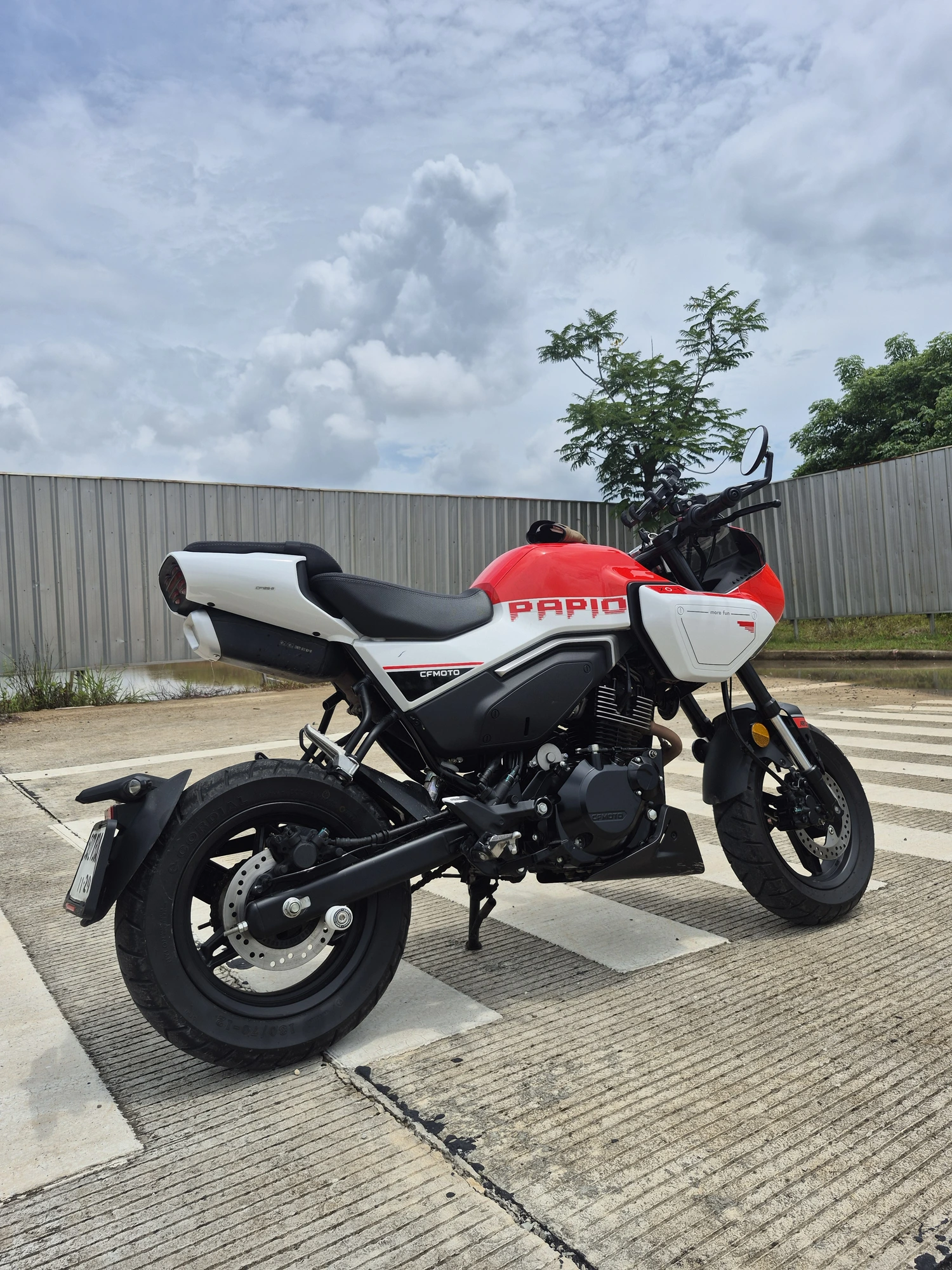
Two machines, both chosen with my eyes rather than a spreadsheet. Then the price arrived.
Nine horsepower doesn't feel like a limitation until you point it at a hill. I ride to Ciwidey, south of Bandung, where the road goes up and down for hours. On a bike like this you don't arrive at a climb, you prepare for it: downshift before the slope, carry as much speed as you dare, check what's behind you and decide whether you're going to be in someone's way. Do it on the slope instead of before it and you have nothing left to spend. The bike goes quiet and you sit there at forty while the world overtakes you.
What that teaches is narrower than people expect. It isn't serenity. It's that you cannot buy your way out of a bad line. On a bigger bike, a mistake gets fixed with the throttle — you exit slow, you twist, you're fine. On mine, the mistake stays a mistake for the next thirty seconds. So you learn to not make it.
The camera's price was similar, though it arrives less often. In Tokyo I walked at night and came home with nothing sharp. Micro Four Thirds sits behind full frame in light gathering, so every night shot is a negotiation between ISO I don't want and a shutter speed my hands can't hold. In daylight it's a completely different camera: sharp, easy, exactly what I wanted from it. At night I ended up hunting light instead of taking pictures; shop windows, vending machines, station entrances. The city has plenty of light. It just doesn't put it where I want it.
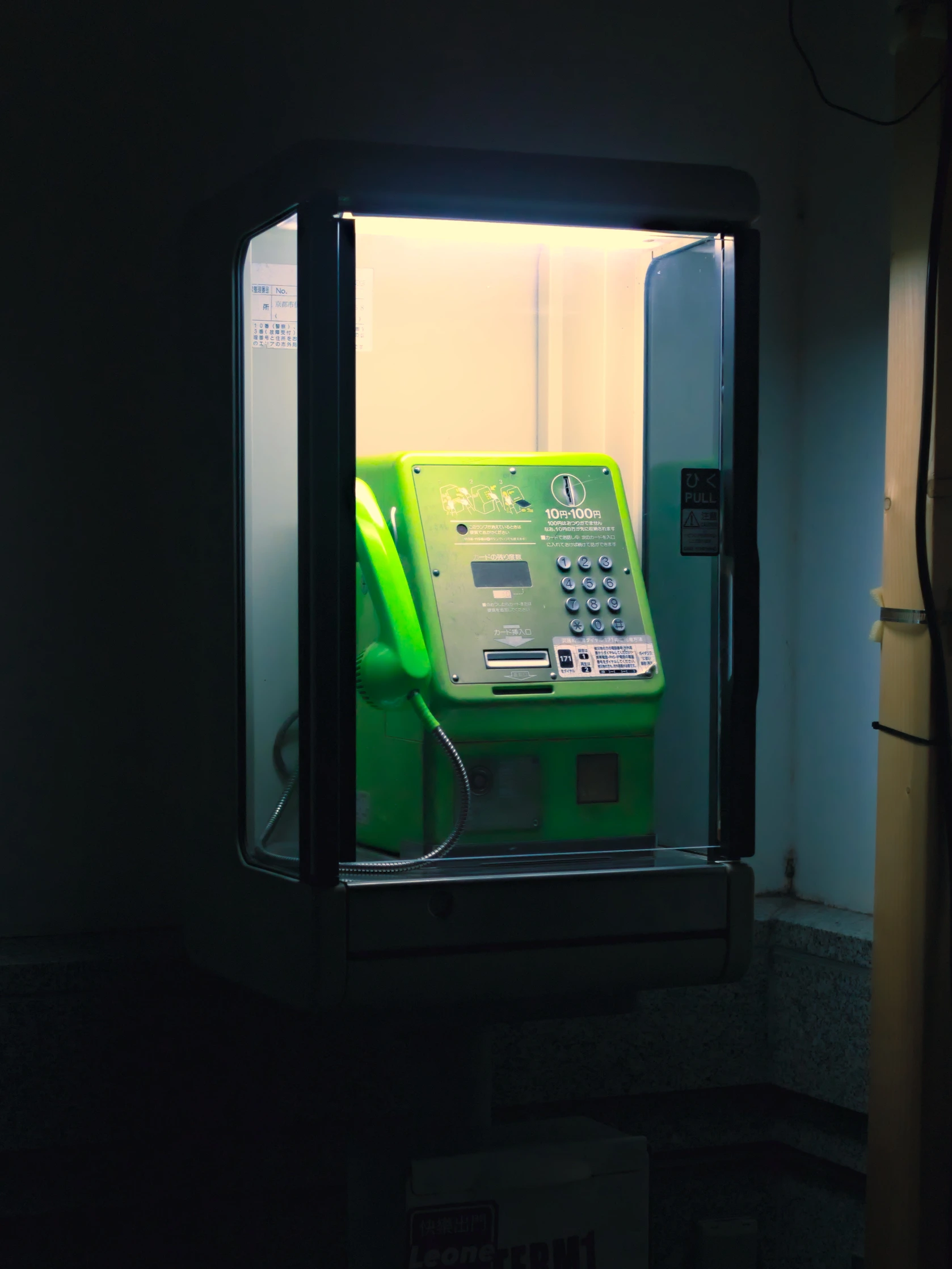
Here is what I'd like to claim. That I chose the smaller machine on purpose, as a practice, the way people choose one lens to become better photographers. I didn't. I chose a cute bike and a handsome camera and the constraints were the cost of admission.
But the constraint is the part that made me better. Not because limits are noble, but because they answer a question I would otherwise keep asking. Left alone, I will spend an evening comparing specs. With nine horsepower, there is nothing to compare. The question shrinks to: what can I do with this? That one I can answer, and then I can go riding.
I won't pretend it's free. I would like to overtake a truck on an incline without doing arithmetic first. I would like to shoot a night street at ISO 800 and get something clean. I've had evenings where the honest summary is that I couldn't get the photo, and no amount of good attitude made a picture appear.
The bike I'll keep. It's cute, nine horsepower is enough for the roads I actually ride, and I've stopped wanting more. The camera is the one I'd trade up — a body that behaves at night, if the budget ever agrees. So this isn't a rule I live by. I just bought the things I liked, and the limits turned out to be the useful part.